Mini Facelift at BMACS
A focused approach to lower-face rejuvenation
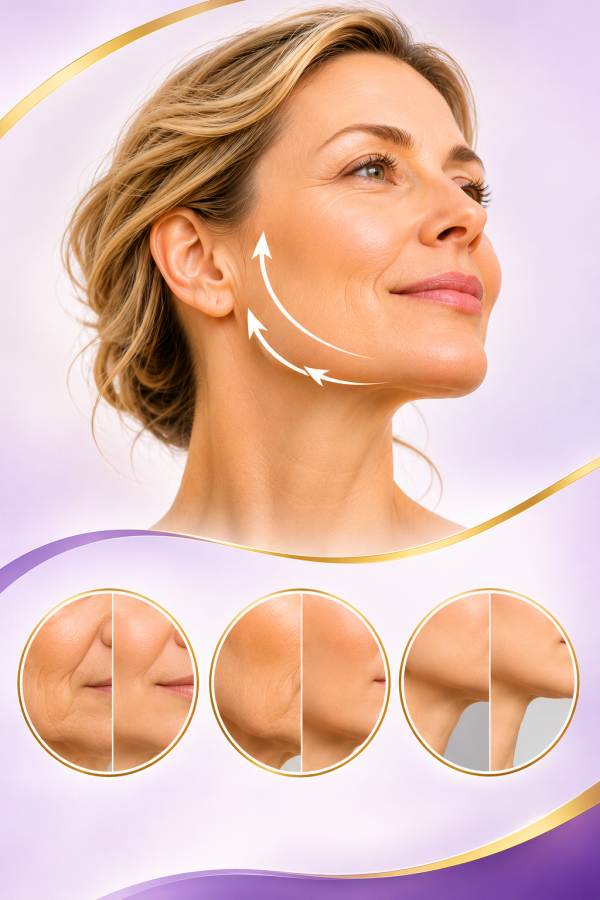
A mini facelift is a surgical option for selected patients with early or less extensive sagging around the lower face and jawline.
At Brits Medical and Cosmetic Service (BMACS), a consultation gives you the opportunity to discuss your concerns, understand the options and explore whether a limited facelift is appropriate for you.
Book a consultation to discuss your options with BMACS.

What is a mini facelift?
“Mini facelift” describes a range of more limited facelift operations. There is no single standard technique, so it is important to understand exactly what your surgeon proposes.
The procedure typically involves incisions around part of the ear, through which selected tissues are lifted and excess skin may be removed. The extent of deeper tissue treatment depends on the technique.
Although the operation is more limited than some full facelifts, it remains surgery, with permanent scars, recovery time and potential complications.
What can a mini facelift improve?
For suitable patients, a mini facelift may help improve:
- Early jowling.
- Mild lower-face skin laxity.
- Reduced definition along the jawline.
Its effect on significant neck looseness or more extensive facial sagging may be limited. It does not directly treat forehead lines, eyelid changes, pigmentation or fine surface wrinkles.
Mini facelift or full facelift?
The appropriate procedure depends on your anatomy and the extent of the changes you wish to address.
A mini facelift may suit patients who need a smaller area treated. A more comprehensive facelift or combined face and neck lift may be appropriate where tissue laxity is more extensive.
A smaller operation does not automatically mean it is the best choice. Your surgeon should explain the likely improvement and limitations of each option.
Is a mini facelift suitable for me?
Suitability depends on your general health, skin quality, facial structure and expectations—not simply your age.
Your assessment should include your medical history, previous facial treatments, medication, supplements, smoking and nicotine use. These factors can influence bleeding risk, healing and the surgical plan.
You should have realistic expectations and enough time and support for recovery.
What happens during treatment?
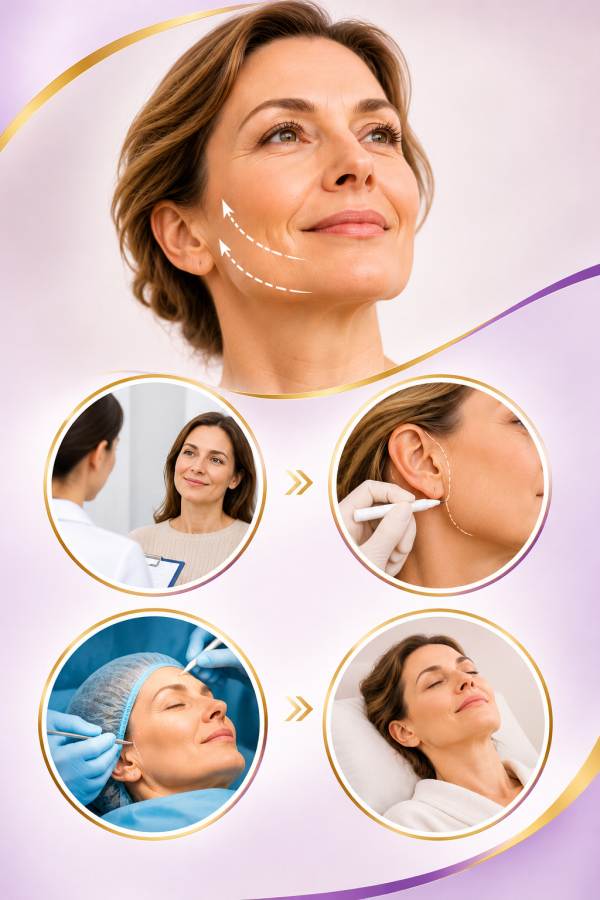
Your surgeon will explain the incision placement, tissues being treated and type of anaesthetic proposed.
Depending on the operation and your circumstances, local anaesthetic, sedation or general anaesthetic may be considered. Whether you can return home the same day depends on the procedure and your recovery.
You will receive instructions about preparation, transport home and any support needed afterwards.
Your consultation
Your consultation should cover:
- Your concerns and desired changes.
- Whether a mini facelift can reasonably address them.
- Alternatives, including a fuller facelift, other treatments or no treatment.
- The surgeon’s qualifications and experience.
- Scars, anaesthesia, recovery and possible complications.
- Aftercare, emergency contact arrangements and follow-up.
- A written quotation explaining what is included.
You should have time to consider the information without pressure to proceed.
Recovery and results
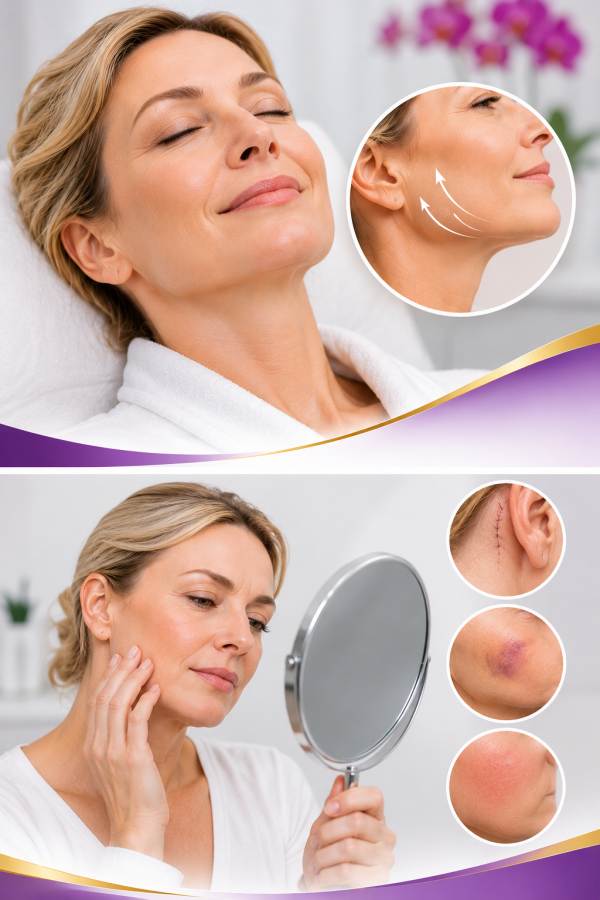
Bruising, swelling, tenderness, tightness and temporary numbness can occur after surgery. Dressings and follow-up appointments may be needed.
Recovery varies with the technique and individual healing. Avoid assuming that “mini” means minimal downtime: your surgeon will advise when you can return to work, drive, exercise and attend social events.
The appearance develops gradually as swelling settles. Scars continue to mature over subsequent months.
Risks and considerations
Possible complications include bleeding, infection, delayed healing, noticeable scarring, skin loss, altered sensation and asymmetry.
Facial nerve injury can cause temporary or permanent weakness. Changes around the ears, hairline or hair growth may also occur. Surgery carries additional risks, including blood clots and reactions to anaesthesia.
The improvement may be less than expected, and further surgery may sometimes be needed. Your surgeon should explain your individual risks and how additional treatment would be managed and funded.
Frequently asked questions
Is a mini facelift the same as a thread lift?
No. A mini facelift involves surgical incisions and tissue lifting. A thread or suture lift uses threads to support selected tissues. The procedures have different effects, limitations and risks.
Will I have scars?
Yes. Incisions are usually placed around parts of the ears, depending on the technique. Scars generally fade but remain permanent and can sometimes be noticeable
Will it tighten my neck?
Yes. Incisions are usually placed around parts of the ears, depending on the technique. Scars generally fade but remain permanent and can sometimes be noticeable.
How long will the results last?
Results vary, and ageing continues after surgery. Genetics, skin quality, smoking, sun exposure and weight changes can influence how your appearance develops. A fixed duration cannot be guaranteed.
Is recovery quicker than a full facelift?
Some limited procedures may involve a shorter recovery, but this is not guaranteed. Your surgeon should give advice based on the actual operation planned.
What symptoms need urgent advice?
Contact your surgical team promptly if you develop sudden swelling, severe or increasing pain, bleeding, fever or unexpected changes in skin colour.
How much does a mini facelift cost?
Contact BMACS for a personalised quotation following assessment. Confirm whether consultation, anaesthesia, facility fees, dressings and follow-up care are included, and ask about charges for additional treatment.
Explore mini facelift options with BMACS
Discuss whether a mini facelift is appropriate for your facial anatomy, preferences and recovery needs.
Visit bmacs.org.uk to request a consultation.
Treatment is subject to clinical assessment and suitability. All surgery carries risks, and results vary between individuals